
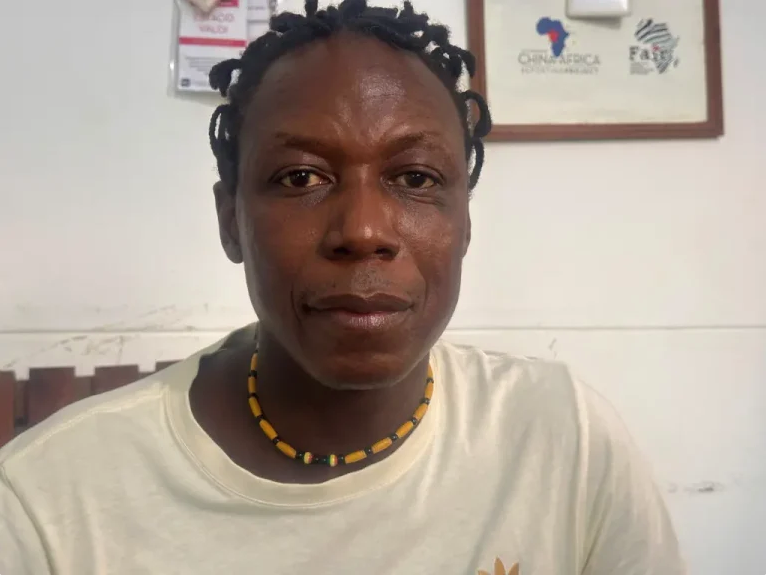
Image: Courtesy of Quinton Nicuete
This week investigative journalist Estacio Valoi was summoned to the offices of the National Criminal Investigation Service (SERNIC) in Pemba, Mozambique, to attend a criminal defamation hearing.
This latest act of intimidation comes barely a month after his laptop, tablet and two phones were returned following a three-month seizure in response to his reporting on alleged timber smuggling.
The criminal defamation case was brought by Safi Timber after Valoi published an article in August last year about the widely televised seizure by the authorities of 111 containers loaded aboard a ship in the port city of Beira for export to China, allegedly without valid export documents.
The company chose to bring a criminal complaint, which under Mozambican law could see Valoi jailed for up to a year if convicted, rather than pursue civil proceedings. Recent research by Intelwatch, a Southern African intelligence agency watchdog, documented how threats to media freedom are escalating at an alarming rate in Mozambique and recommended the repeal of all criminal defamation laws.
Valoi, who has spent years fearlessly reporting on environmental crimes, resource extraction, corruption and conflict in Mozambique’s northern province of Cabo Delgado, says the criminal case against him forms part of an intimidation campaign prompted by his long-running investigation into timber smuggling and illegal logging in Quirimbas National Park.
During Monday’s interview, which lasted two hours and 15 minutes, Valoi was interrogated about his reporting on the confiscated containers. “I stated that the 111 containers were indeed seized, and noted that journalists – not just myself, but representatives from various other media outlets – covered the story of what happened at the Port of Beira,” he said. “Officials from the Environmental Quality Agency, the tax authority, and, as is often the case, SERNIC, were also there.”
He told the investigators that he was the only person targeted as a result. “I was left without my equipment for over a hundred days, which resulted in significant social and economic consequences,” he said. “Other intelligence or investigative agencies did not have their equipment seized, nor were they prevented from working.”
He also pointed out that the company had tried to pressure him behind the scenes to produce favourable reporting but had failed to answer his questions when offered a right to reply, or avail itself of other avenues of redress open to aggrieved parties under Mozambican media law. Instead, it sent a legal letter in December 2025 demanding a retraction, and when this was not forthcoming, filed a criminal complaint in April that led to the police raid on his home in June.
His lawyers argued there was no legal basis for the seizure, which infringed on his right to privacy, work and protection of his sources, jeopardised freedom of the press and constituted an act of intimidation. Following a legal challenge by Global Climate Legal Defense and local legal partners, Pemba City Judicial Court agreed to release his equipment, citing lack of justification for the seizure.
The International Press Institute (IPI) previously pointed out that the ongoing targeting of Valoi was the latest incident in a continued pattern of violence, intimidation and judicial harassment of journalists in Mozambique, particularly those reporting on corruption, environmental crimes and resource governance.
“They are abusing the law,” Valoi told Blueprint for Free Speech. “Mozambique is not a free country for journalists to practice in. Several journalists have been killed for doing their jobs. But I will keep on doing mine.”
